I have written something along these lines many times before, but I want to do it again today: Diversity is a city’s key ingredient. And it is that ingredient on so many levels. For a city to be successful and vibrant, you need a diverse population; a diverse economy; a diversity of activities throughout the year; and a diverse built environment. I could likely go on but I think you get the point. It is this last one, on the diverse built environment, that I am going to talk about in this article.

I was supportive of the Harris Green Village development, between Quadra and Cook Street, during the application process because I recognised that we need that scale of injection of rental apartments into our city. In a perfect world the City would never approve a project of that size because of the risk of it being monolithic in design. Even twin buildings can look a little monotonous. Creating even short lengths of streetscape that look the same can lower the pedestrian activity or just make pedestrians sad! Creating whole blocks that are the same is a level worse than that. I am hopeful that the pace of the development at Harris Green Village is slow enough between the eastern and western portion that we see changes in the design of the buildings much like we saw with Hudson District and Dockside Green over the years.

Contrary to the monotony of large scale developments, one of the most delightful aspects of walking around a city is when you find a little building that stands out because it looks different than its neighbours. One of the ways this almost naturally happens is through urban infill developments; buildings being created in the small gaps that exist between other buildings. Usually a little parking lot or a legacy, low-density derelict building. The fact that the new building needs to literally work within the confines of its neighbours can make for some unique design choices. I truly love urban infill buildings. They often get overlooked, both during the planning process and after completion, because they are literally fitting into their surroundings, at least usually. They are usually taking away a gap in the streetscape and so people may not even notice them because the previous small parking lot was actually more jarring visually then the filled in street wall. I should note that one of the reasons that most people find places like Old Town in Victoria delightful is that all the buildings are both unique and fitting in-between their neighbours. Just to point out that this form of building was, at one time, prevalent. However, market forces have over the last 100 years pushed us to create larger floorplate buildings and neighbourhoods. It might be that because of that, the urban infill building is more rare now and therefore, more delightful.
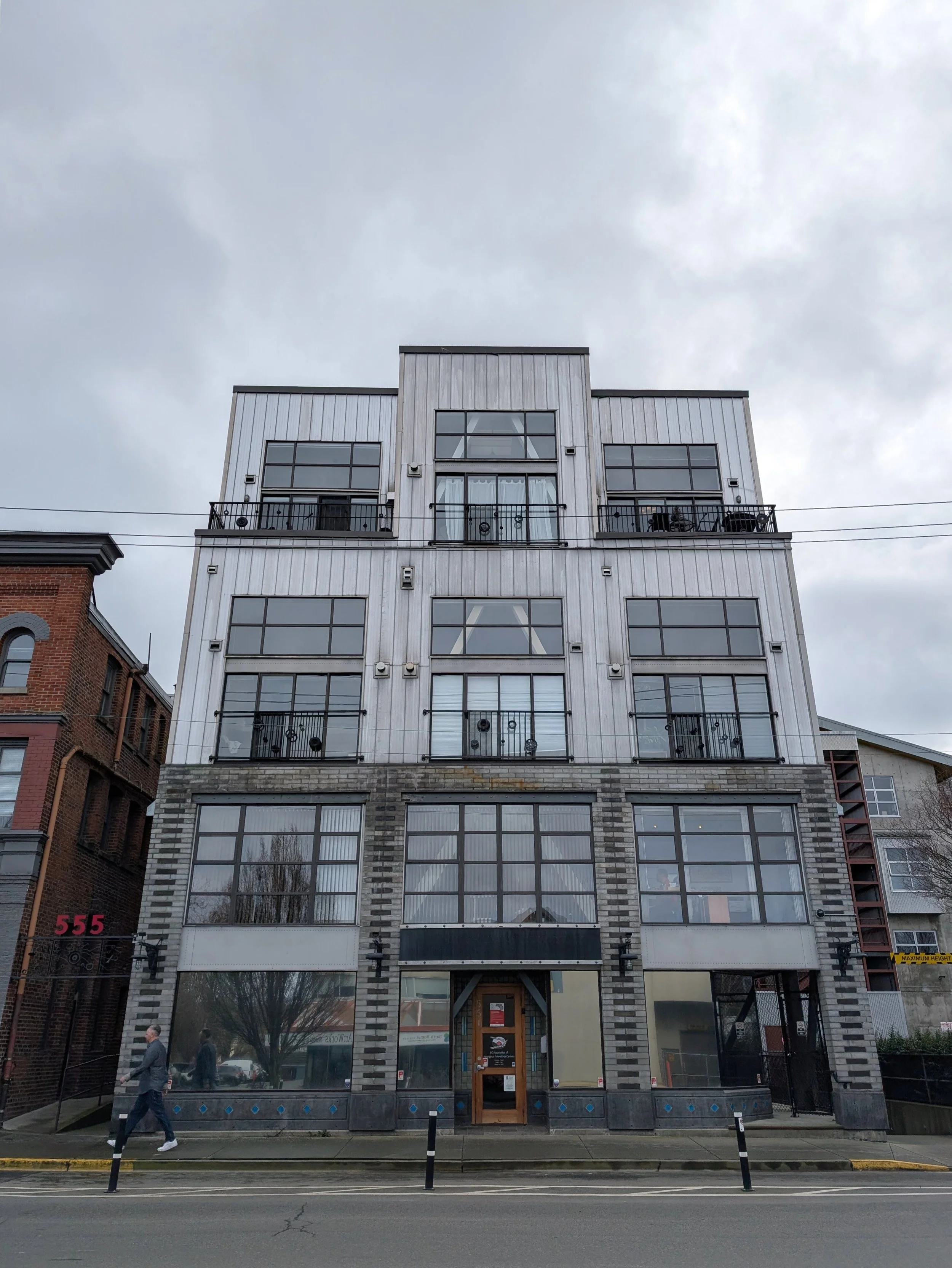
I thought I would highlight five of my absolute favourite urban infill projects built over the last few decades: Jigsaw, The SoMA, CityZen, The Charlesworth, and Skinny Tower.
The Jigsaw Building
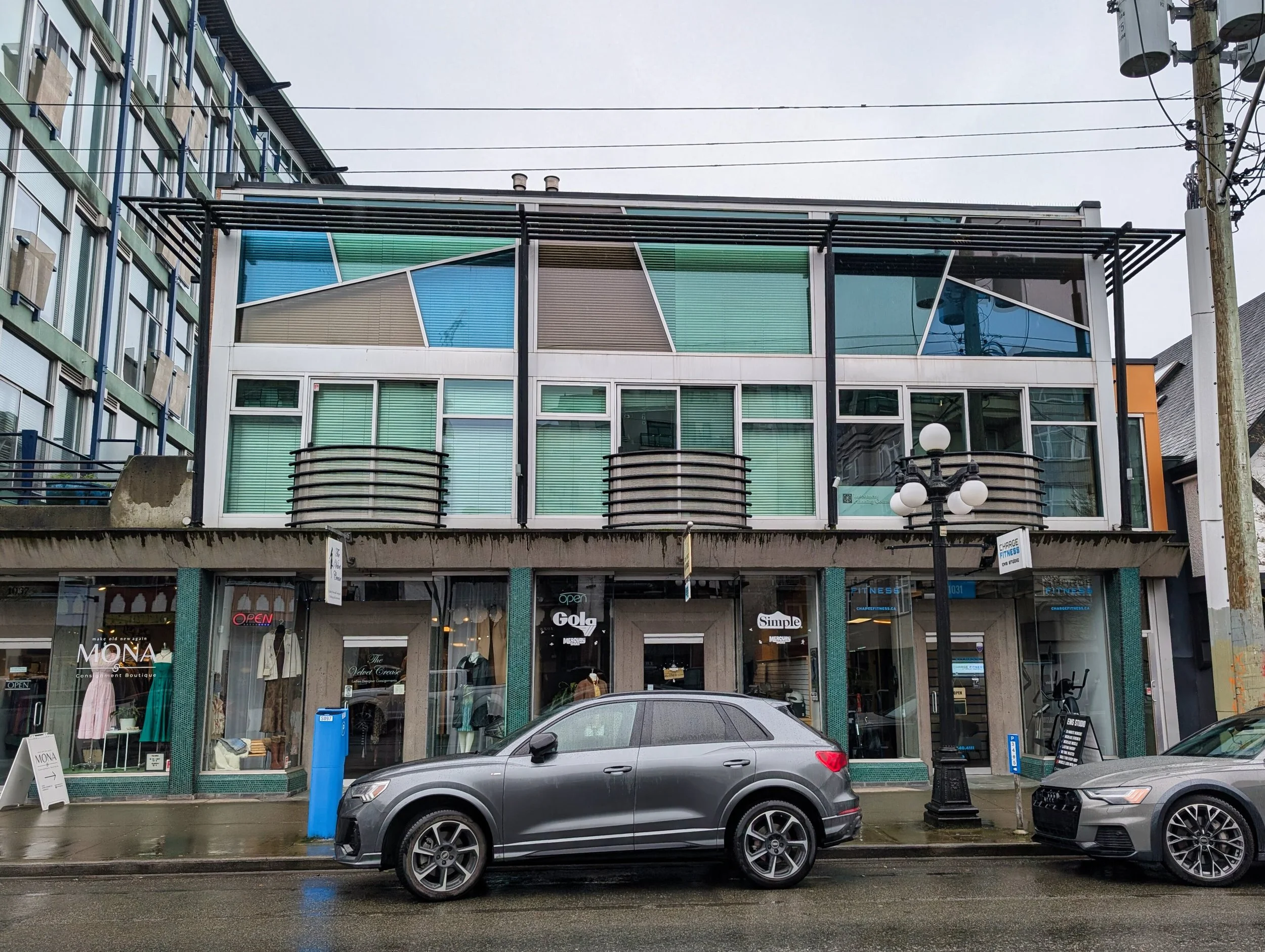
This building almost goes unnoticed on Fort Street as it is so small. It was built shortly after the redevelopment of the Mosaic Building. It was designed by Jan Zak and it was built by Don Charity and Fraser McColl, who also did the Mosaic and the Jukebox a block over on View Street. The detail that went into this building especially when you consider its small size is impressive, including what I think are some of the nicest store entrances and windows in the city. My friend Rob Randall said so correctly, that the effort that went into the design and building of the Jigsaw ensures that it will be a heritage building of the future.
The SoMA
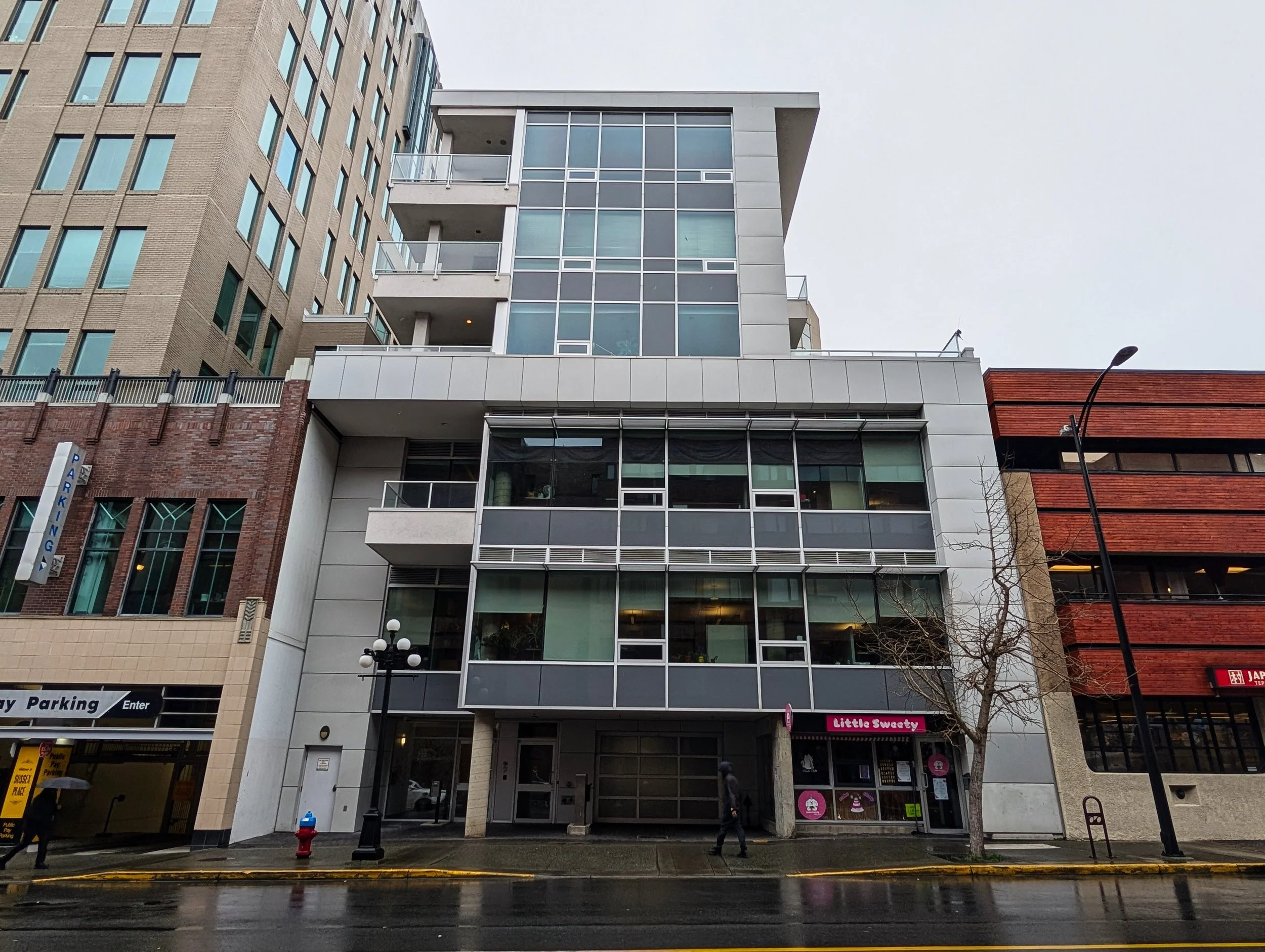
The Space of Modern Architecture or The SoMA as it is known (or really not known) is one of my favourite small, infill buildings in Victoria. The SoMA was built in 2009 on top of a tiny parking lot on Broughton Street. The building has a single ground floor commercial space with two floors of office space and three floors of residential. I love how it just fits in so perfectly between the buildings on either side and despite its diminutive size, really stands out. This amazing building was designed by dHK Architects.
CityZen
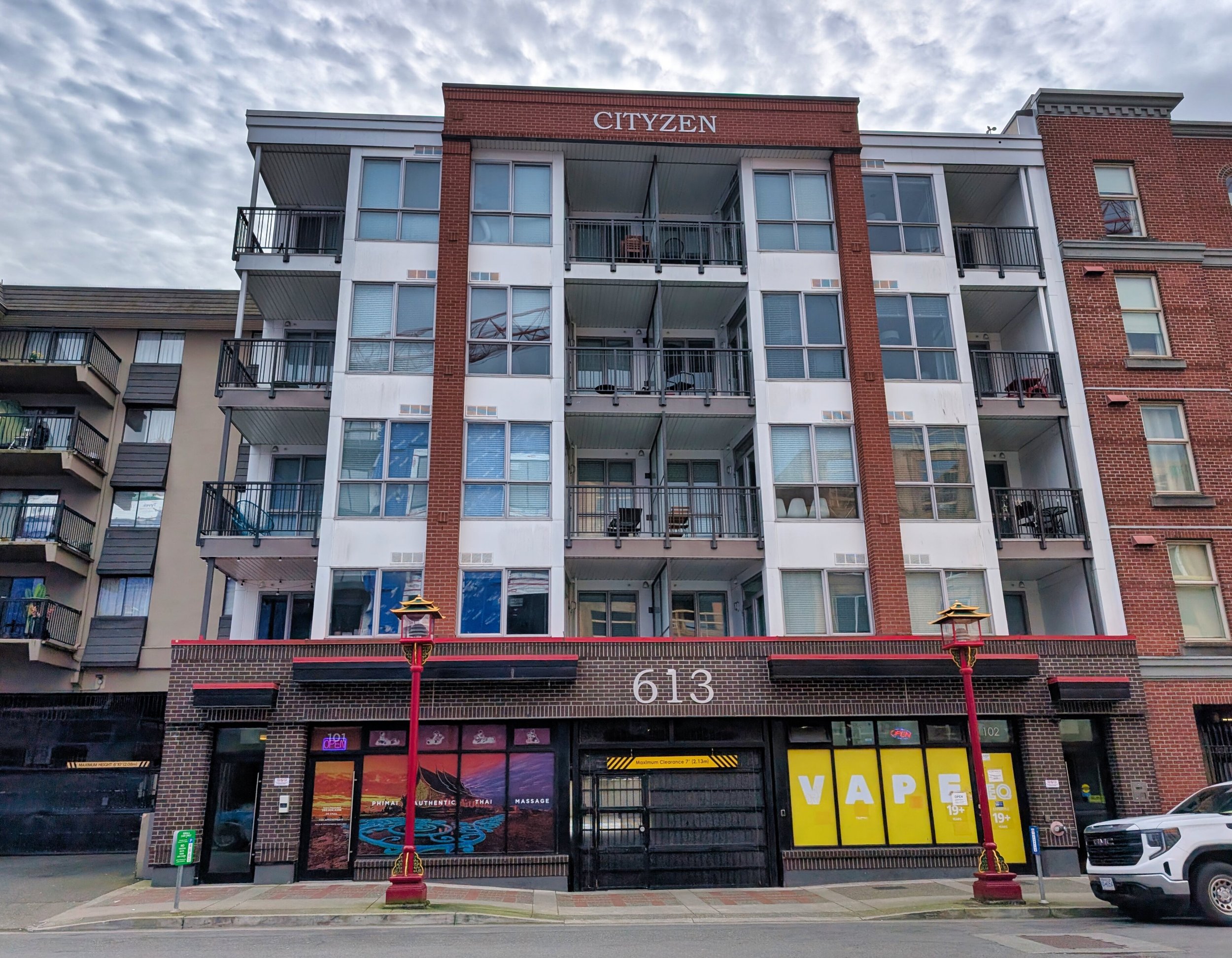
When the 601 was built at the corner of Government and Herald, it cut off a very small lot to its east. The size of the lot was certainly challenging as was the fact that this was in the older part of downtown on the Northern edge of Chinatown. This meant that whatever was going to go in there was not going to be big. Architect Karen Hillel was able to come up with something that fit the space and the neighbourhood well. With the large Spencer Block project across the street, I expect that in five years Herald Street is going to feel a lot different and I would bet many people will begin to notice the little CityZen building more.
The Charlesworth

The Charlesworth is one of the newest buildings on this list of smaller infill buildings. In some ways it doesn’t quite fit the mold of infill as it was not really replacing a vacant lot like the others here did. Instead, it actually took the place of what was quite a nice older house that had been turned into commercial offices. Still, I find that apart from that it will, as time goes on be seen as infill, especially as the city continues to grow around it. This building, and its neighbour The Bell were developed together by GMC Projects. The Bell was a restoration project while The Charlesworth was a new build. I did meet with the developers of these buildings in researching a different project many years ago and I loved their philosophy that the buildings didn’t just have apartments but were there to create community. The Charlesworth on its own is a lovely newer building also designed by Karen Hillel, though I do find it endlessly frustrating that they did not move the facade to the lot line along Cook Street.
Skinny Tower
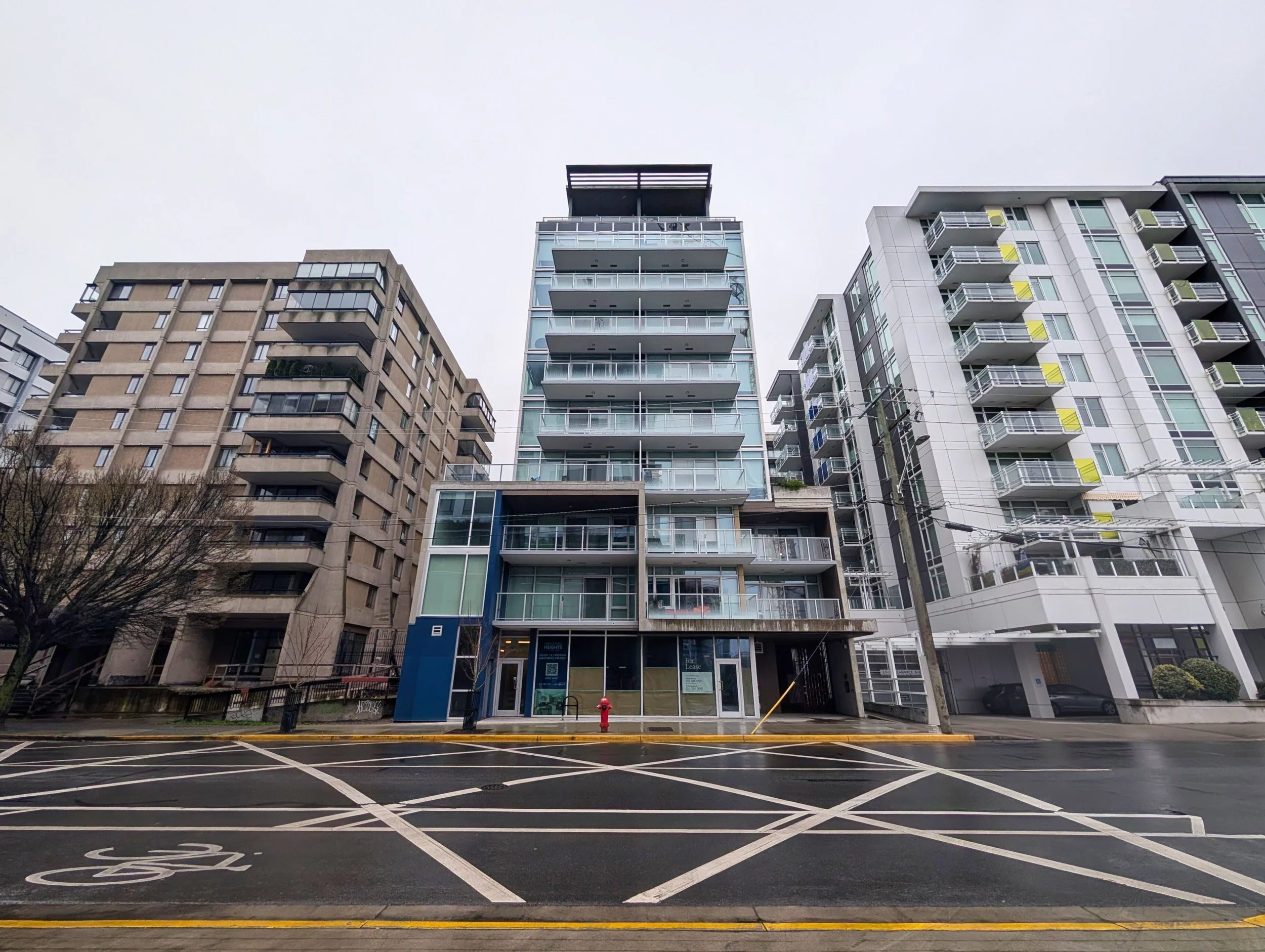
Skinny Tower, which I will be honest I didn’t know the name of until I started writing this article, is on Johnson Street just west of Cook. This building went in a small lot that was left over after 1488 Cook Street was built on its north and east sides. The space here was tiny and with taller buildings on each side, the lot could handle a little more height than the others on this list and still not have the building seem out of place, or really even that noticeable in comparison to them. I really like this building. It feels light and airy despite its size and it fits right in between its neighbours. This building was designed by CEI Architecture.
I would love to know if you have a favourite infill building in Victoria. If you do, please let me know in the comments!